 11
11
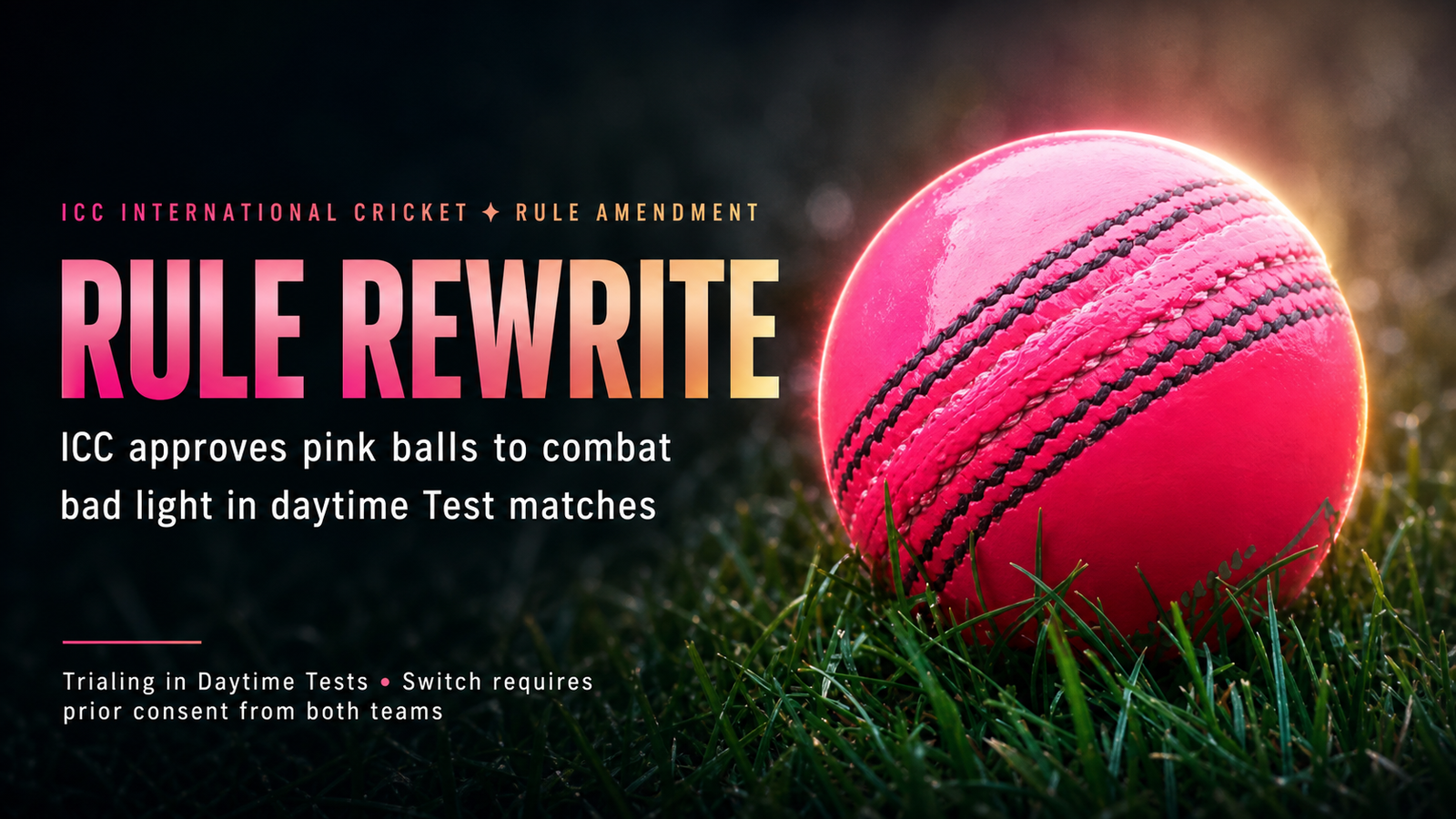
The International Cricket Council has approved one of the most significant experimental rule changes in modern Test cricket, opening the door for pink balls to be used during traditional daytime matches when bad light threatens to interrupt play.
The landmark decision was finalized during a high-profile ICC executive board meeting in Ahmedabad and is aimed at reducing one of the longest-standing frustrations in the sport — the premature suspension of play due to poor visibility.
If successful, the initiative could reshape how Test matches are managed around the world.
Bad light has remained one of the most controversial issues in Test cricket for decades.
Matches are frequently interrupted or halted entirely when umpires determine that visibility levels have fallen below acceptable safety standards for players.
The result has often been lost overs, disrupted momentum, frustrated spectators, and significant scheduling complications.
The ICC now hopes the new pink-ball trial can provide a practical solution.
Under the approved trial framework, teams will be allowed to switch from the traditional red ball to a pink ball if deteriorating light conditions threaten the continuation of play.
However, the rule will only apply if both competing teams provide consent before the start of the match.
The pink ball’s enhanced visibility is expected to allow players, officials, broadcasters, and spectators to follow the action more effectively during difficult lighting conditions.
The decision represents a significant evolution for the longest format of the game.
Traditionally, red balls have been used almost exclusively in daytime Test matches, while pink balls have primarily been reserved for day-night fixtures.
Allowing a mid-match transition between ball types introduces an entirely new tactical dimension that teams may need to prepare for in future contests.
Cricket analysts are already debating how the rule could influence match dynamics.
Pink balls are known to behave differently from red balls in certain conditions, often generating additional movement and swing under specific lighting environments.
As a result, a ball change during a crucial phase of a Test match could dramatically alter batting and bowling conditions, potentially influencing outcomes in unexpected ways.
Alongside the ball trial, the ICC has also approved expanded research into modern stadium lighting technology.
The governing body is exploring new methods to improve visibility standards and reduce interruptions caused by fading natural light.
Officials hope technological advancements can eventually complement rule changes and create a more seamless viewing experience for fans worldwide.
The proposed trial is expected to attract significant attention from players, coaches, and cricket boards.
Teams will need to evaluate how a potential switch to a pink ball could affect tactics, bowling strategies, field placements, and batting approaches during long-format matches.
Preparation and adaptability may become increasingly important if the trial proves successful.
The ICC views the initiative as part of a broader effort to modernize the game while preserving the traditions that make Test cricket unique.
By maximizing playing time and reducing weather- or light-related disruptions, administrators hope to improve both competitive integrity and fan engagement.
The outcome of the trial period could determine whether the rule eventually becomes a permanent feature of international cricket.
Organization: International Cricket Council (ICC)
Decision: Pink ball trial approved for daytime Test matches
Purpose: Reduce interruptions caused by bad light
Condition: Requires consent from both teams before the match
Location of Approval: Ahmedabad board meeting
Additional Initiative: Expanded research into stadium lighting technology
Potential Impact: Changes to visibility, swing, tactics, and match conditions
Main Goal: Maximize playing time and improve Test cricket experience
Significance: One of the biggest experimental rule changes in modern Test cricket history