 11
11
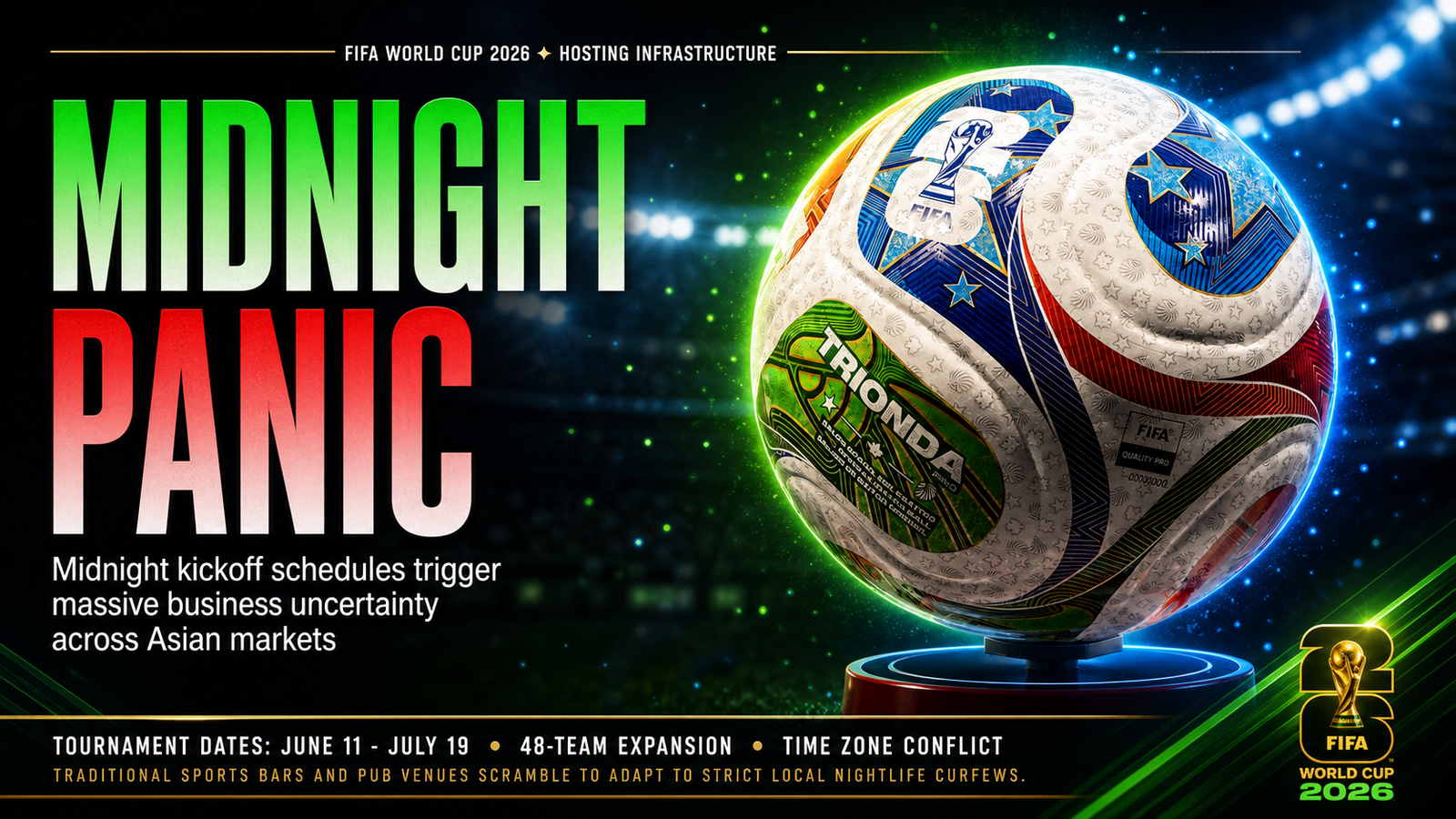
The countdown to the 2026 FIFA World Cup is accelerating, but businesses across Asia are already confronting an unexpected challenge.
With the tournament set to be hosted jointly by United States, Canada, and Mexico from June 11 to July 19, 2026, many of the competition’s biggest matches are expected to take place deep into the night for viewers across Asian markets.
The unusual scheduling has created growing concerns throughout the hospitality sector, where businesses traditionally rely on World Cup crowds to generate significant revenue.
Unlike previous tournaments hosted in Europe, Asia, or the Middle East, the North American time zones create a unique viewing situation for millions of football fans.
Many high-profile group-stage fixtures and knockout matches are projected to begin after midnight across several Asian countries, with some games finishing in the early hours of the morning.
For bars, pubs, and sports venues, that creates a difficult balancing act between serving customers and complying with local operating regulations.
The World Cup has historically been one of the most profitable events for hospitality businesses worldwide.
Packed venues, special promotions, and large fan gatherings have traditionally transformed football tournaments into major economic opportunities.
However, operators across Asia are now evaluating how late-night schedules could impact attendance, staffing requirements, transportation logistics, and venue operations.
Many businesses are exploring extended opening hours where regulations permit.
Sports bars and nightlife venues are among those most affected by the scheduling reality.
With strict local curfews and limited overnight transportation options in some regions, venue owners face uncertainty about whether traditional World Cup watch parties can operate at full capacity.
Some establishments are already considering special event packages, overnight viewing experiences, and partnerships with transportation providers to accommodate supporters.
While hospitality businesses face challenges, digital platforms could emerge as major beneficiaries.
The growth of mobile streaming and connected television services allows fans to follow matches from home without the logistical difficulties associated with late-night travel.
Industry analysts expect streaming numbers to surge throughout the tournament, particularly during the knockout stages when audience interest reaches its peak.
The scheduling shift could also benefit online betting operators.
With fans increasingly watching matches individually rather than in large public gatherings, digital sportsbooks may see heightened engagement during live events.
Many industry observers believe online platforms will play a larger role than ever before during the 2026 tournament.
Despite the logistical concerns, enthusiasm for the tournament remains exceptionally high.
The expanded 48-team format promises more matches, more nations, and greater global participation than any previous World Cup edition.
Businesses across Asia are now working to adapt their strategies and ensure they can still capitalize on football’s biggest event despite the unusual viewing hours.
As the first World Cup jointly hosted by three nations and the first featuring 48 teams, the tournament is expected to redefine several aspects of global football.
The time-zone challenge is simply another example of how a truly worldwide event can affect industries far beyond the pitch.
For hospitality operators, broadcasters, streaming services, and football fans alike, preparation for an unprecedented World Cup experience is already underway.
Tournament: 2026 FIFA World Cup
Hosts: United States, Canada, and Mexico
Dates: June 11 – July 19, 2026
Format: Expanded 48-team tournament
Main Issue: Late-night and early-morning kickoffs in Asian markets
Affected Sector: Sports bars, pubs, hospitality businesses, and nightlife venues
Potential Beneficiaries: Streaming services and online sportsbooks
Main Storyline: Businesses adapt to major scheduling challenges ahead of World Cup 2026