 11
11
Grand Slam openings are not always about perfection. Sometimes they are about reminding the field that the champion is still standing, still hitting through nerves and still capable of turning an awkward first round into a clean result. Aryna Sabalenka did that in New York.
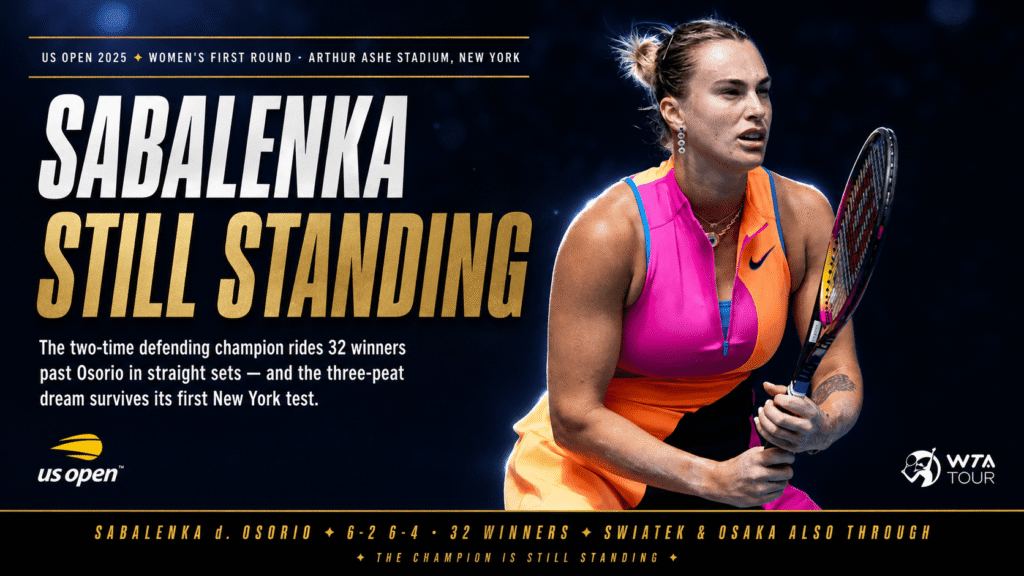
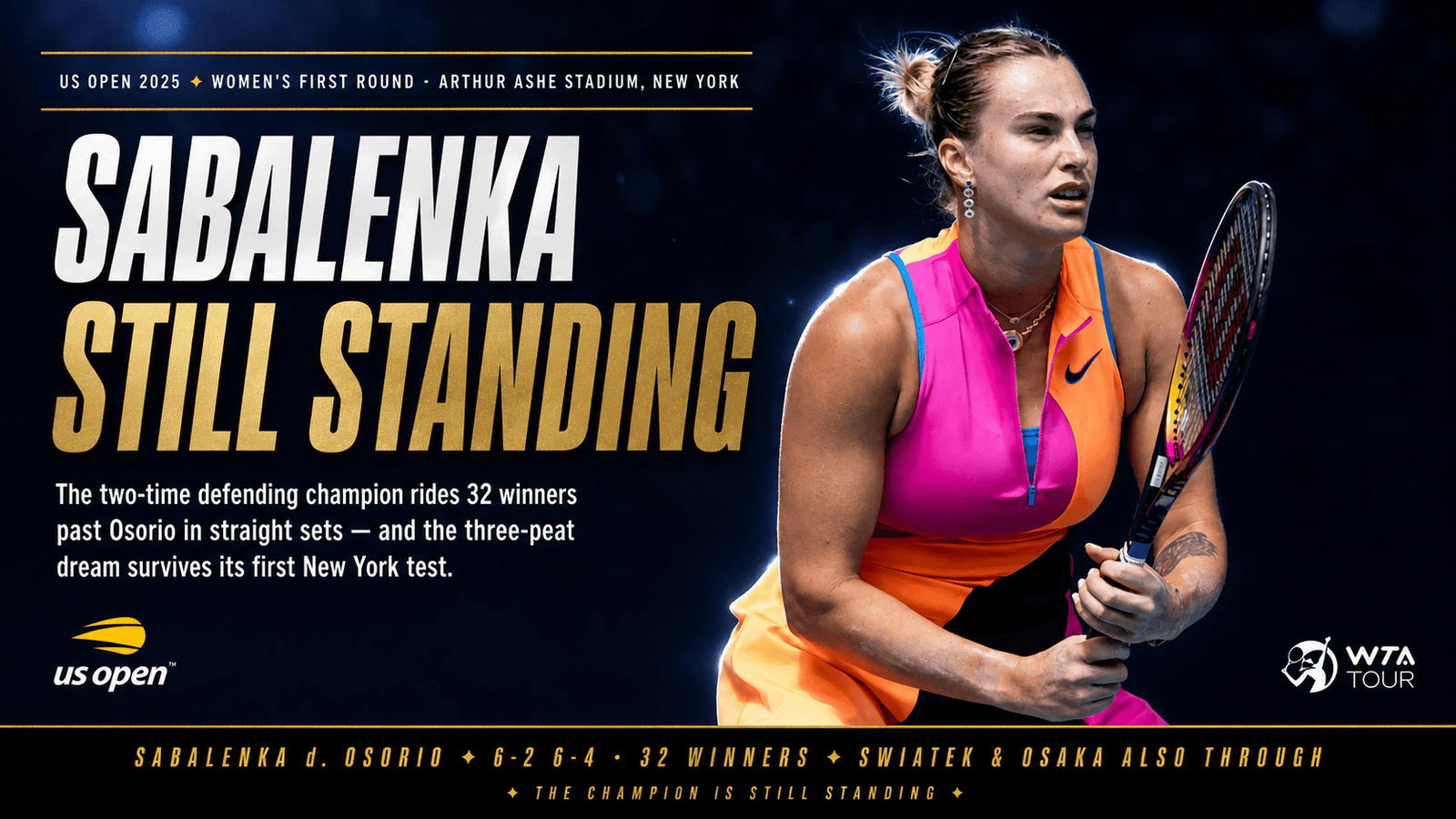
The world No. 1 and two-time defending US Open champion beat Camila Osorio 6-2, 6-4 to reach the second round, according to AFP updates carried by News24. It was not a flawless performance. Sabalenka made 23 unforced errors. But she also struck 32 winners, stayed aggressive and closed the match in straight sets. On the same day, Iga Swiatek beat Wang Xiyu 6-2, 6-3, while Naomi Osaka edged Anastasia Zakharova in two tiebreak sets.
For Bangladesh’s sports readers, this is the type of global tennis story worth following early. Djokovic’s exit has already shaken the men’s draw. On the women’s side, the biggest names are trying to stop the tournament from becoming chaotic before it gets going.
Sabalenka arrived in New York carrying two different forms of pressure. The first was obvious. She is chasing a rare third straight US Open title, and defending a major once is hard enough. The second was more subtle. News24’s AFP feed noted that her three-peat push comes amid a worrying drop in form, with Sabalenka not having reached a final since completing the Indian Wells and Miami double in March.
That made the Osorio match a test of mood as much as level. A champion can win ugly in the first round and still feel better by the end of the day. Sabalenka did not have to produce her best tennis. She had to show that the baseline power, first-strike confidence and closing instinct were still available when needed.
Osorio made her work in the second set. Sabalenka later said her opponent brought the fight and made her work hard for every point. That is the correct kind of first-round warning. It reminds a champion that the draw will not give gifts, without causing real damage.
The 23 unforced errors will interest her team because they show there is still cleaning up to do. But the 32 winners explain why Sabalenka remains such a difficult match-up. She can give away points and still overwhelm opponents because her attacking ceiling is so high.
The scoreline, 6-2, 6-4, also matters. First rounds at majors can become long, emotional traps. A champion who is not at her sharpest can suddenly spend two and a half hours fighting a player with nothing to lose. Sabalenka avoided that. She had enough resistance in the second set to stay honest, but not enough danger to drain her before the second round.
For a player trying to defend a title, energy is currency. Every straight-sets win in week one protects the legs and the mind. The tournament will get harder. That is precisely why this kind of start helps.
Sabalenka’s game does not need mystery to be effective. Everyone knows the power is coming. The challenge is surviving it long enough to make her doubt. Osorio pushed, but she could not keep Sabalenka uncomfortable for long enough.
Iga Swiatek’s win over Wang Xiyu added another important note to the day. The six-time Grand Slam singles champion came through 6-2, 6-3 in 1 hour and 28 minutes, saying afterwards that it was a good day in the office and that she felt good from the beginning.
Swiatek is seeded eighth in New York, but nobody in the draw will treat her like a normal eighth seed. She has already won the US Open before, and her ability to build rhythm through early rounds is one of the most dangerous parts of her game. When Swiatek starts controlling tempo, she can make opponents feel as if the court has shrunk.
Her presence also gives Sabalenka’s title defence a serious storyline. A champion trying to win three in a row needs rivals who make the route feel significant. Swiatek provides that. So do players like Elena Rybakina, Coco Gauff, Jessica Pegula and others in the field.
The women’s draw is not a one-player race. Sabalenka made the first statement, but Swiatek made sure it was answered.
Bangladesh does not need a local player in the draw for US Open tennis to matter to its sports audience. Grand Slam tennis has a regular following in Dhaka and across the country, especially when the matches involve names that casual fans recognise. Sabalenka, Swiatek and Osaka are exactly those names.
For a Bangladesh news site trying to broaden sports traffic beyond cricket and football, women’s tennis is a useful lane. It offers star power, daily results, strong global search interest and human stories around form, pressure, comeback and legacy.
There is also a timing factor. US Open matches often finish early in Bangladesh time, creating morning search demand. Readers wake up looking for the result, the score and the wider meaning. A simple update can bring the click, but a humanised piece keeps the reader longer.
That is why Sabalenka’s opening win deserves more than a scorecard mention. The three-peat attempt gives the tournament a clear thread. Swiatek’s start gives it tension. Osaka’s progress adds a comeback angle. The women’s draw already has enough to hold attention.
Naomi Osaka’s win over Anastasia Zakharova was tighter than Sabalenka’s or Swiatek’s. News24’s AFP update listed the score as 7-6(8/6), 7-6(7/3), a match of fine margins and pressure points. For a four-time Grand Slam champion whose career has had many stops and starts, any major win carries extra emotional weight.
Osaka’s best tennis still has an aura, especially in New York where she has won before. The question is consistency. Can she back up a tight opener with enough physical and mental freshness to build a run? The answer may define how dangerous she becomes in the second week.
Her presence helps the tournament because she brings a different rhythm. Sabalenka brings force, Swiatek brings control, Osaka brings a blend of first-strike power and emotional intrigue. Tennis tournaments become richer when contrasting champions are all alive in the draw.
Even if Osaka is not yet being treated as a top favourite, nobody will want to see her name early.
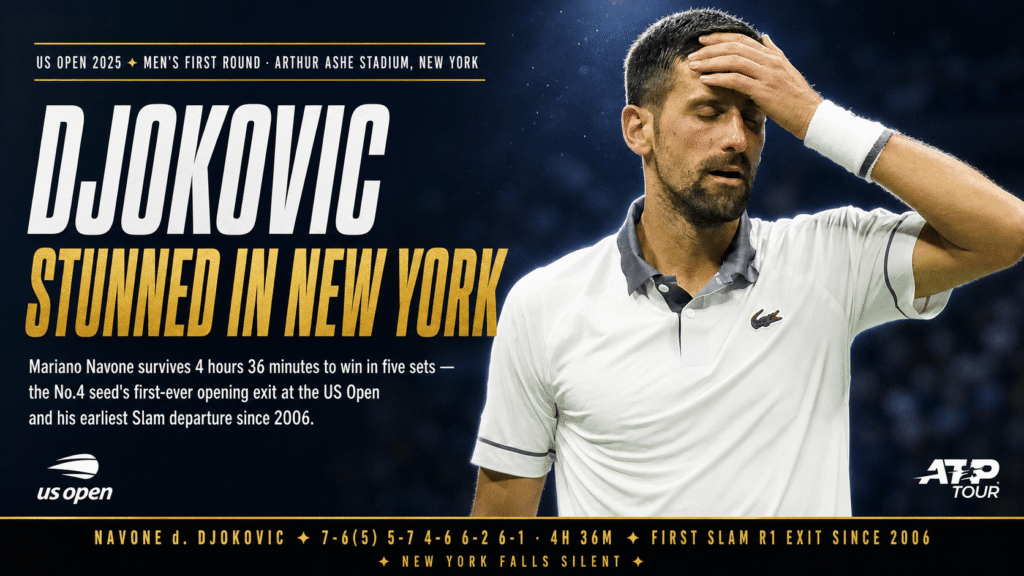
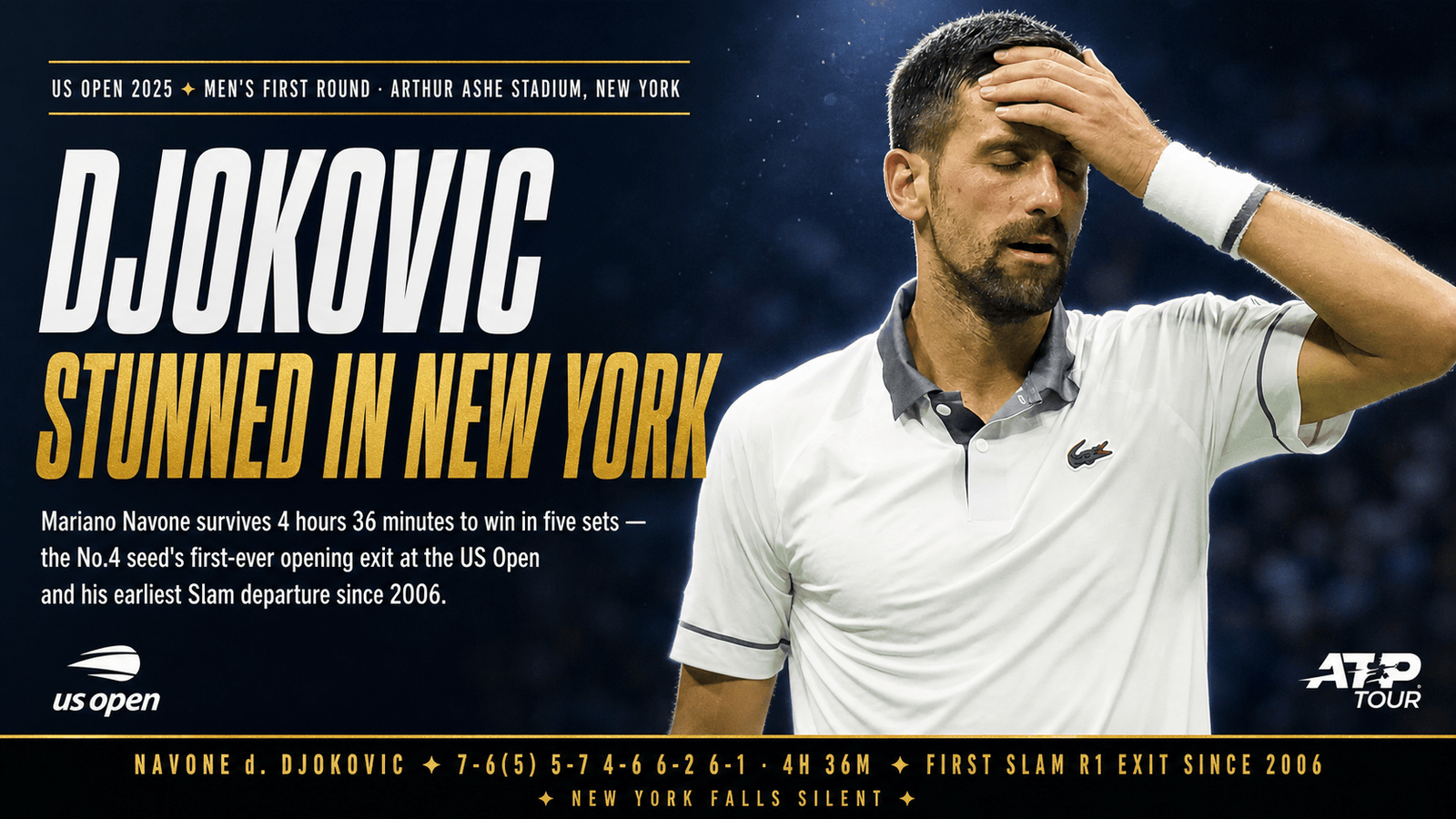
It is impossible to discuss the opening days without mentioning the men’s shock. Novak Djokovic’s first-round loss to Mariano Navone changed the atmosphere of the event. Carlos Alcaraz then returned from a four-month wrist absence and beat Roman Safiullin 6-4, 6-4, 6-4, while the tournament was already missing top-ranked Jannik Sinner through a knee injury.
That matters for the women’s draw because the whole tournament now feels unstable. One side has already lost a giant. The other side has champions trying to avoid the same early turbulence.
Sabalenka’s job is to keep her campaign boring for as long as possible. In Grand Slam tennis, boring can be beautiful. Straight sets, quick recovery, controlled aggression and no injury concerns are exactly what champions want in week one.
Sabalenka moves forward with the title defence alive and the spotlight growing. The performance against Osorio was good enough, but it also gave her team clear details to sharpen. The errors must come down. The aggression must remain. The balance between patience and power will decide whether the three-peat dream feels real deep into the tournament.
Swiatek’s progress ensures the pressure does not disappear. Osaka’s win adds another name to track. Alcaraz’s return and Djokovic’s exit keep the wider US Open conversation loud.
For now, Sabalenka has done what champions must do first. She avoided the early trap. She stayed aggressive when challenged. She walked out of round one with a win, not a warning sign.
The US Open is still young, but the women’s title race already has shape. Sabalenka is the champion being hunted, Swiatek is the threat nobody wants to meet, and Osaka is the former queen trying to remind everyone what New York once brought out of her.